
Christmas in slatina
Pastor Roumen Ivanov tells how your gifts were distributed in one of the poorest communities in Bulgaria
Almost everyone has gathered along the Roma ghetto’s single street – about a hundred souls, children and adults spanning four generations, yet all inter-related. Their faces bear the marks of poverty and weariness, their Roma community seemingly condemned to live in unending deprivation. Golden rays linger on the muddy street, as if the sun itself, like us, wishes to offer its quiet, heavenly Christmas gift.
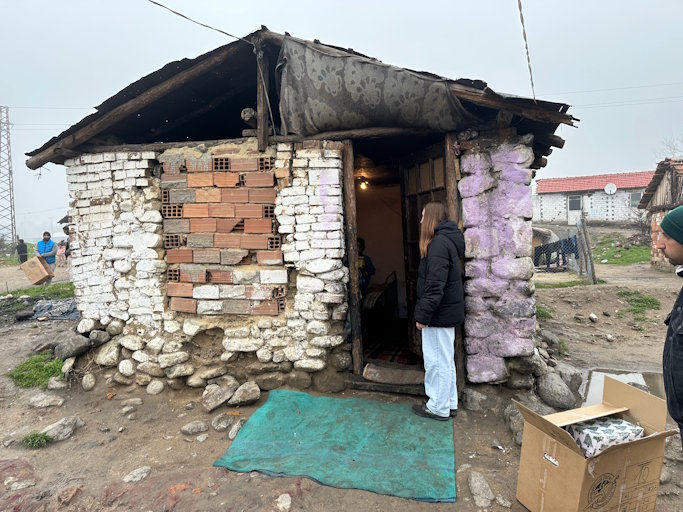
The ghetto lies in the hollow of a dry streambed: harmless and silent most of the year, but during heavy rains, a raging, merciless beast. The torrent devastates fragile shacks, sweeping away belongings and garbage alike, leaving only memories of loss and yet another reminder of life’s fragility here. Thanks be to God, it has taken no human lives so far.
We are visiting the children bringing them Christmas gifts: for most of them, the only presents they will receive this year.
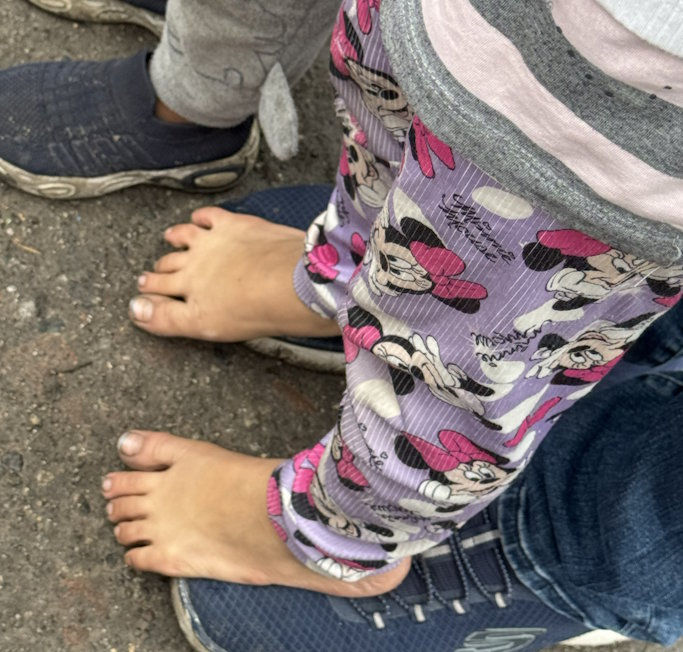
Everyone has come outside. The children’s cheeks are red from the cold, their clothes thin and worn, their eyes wide and shining, impatiently eyeing the van filled with boxes.
We have gifts for everyone—men and women, girls and boys, the elderly and infants alike. Hearing of our arrival, everyone has gathered outside the ‘church’—the house we bought where a homeless family finds shelter, where soup is served on cold days, and where believers gather for prayer and worship.
In this ghetto, everyone believes. Not everyone lives as a believer should, but everyone knows one thing: if it were not for God’s mercy, they would not survive the fate allotted to them. They are right: I, personally, would not last a single week in Dancho’s damp, cramped, smoke-filled shack. Yet he has lived there his whole life.
Ask him, “How are you?” and he always replies: “I’m fine. Very fine.”
No irony in his words—only resignation and a strange, quiet hope.
Before we distribute the gifts, important things must be said. I share the message of Christmas, speaking of the One who left heavenly glory to be born into poverty like theirs. Of the One who took the form of the poor and the rejected in order to lead people out of darkness, to restore the dignity, honour, and nobility they were created with as God’s children.
Then I ask the men to bless their wives and children. The women—to bless their husbands. And the children—to bless their parents.
Never before had I seen these rough, hardened, sometimes wild men do such a thing. Hands accustomed to heavy labour now tremble slightly. Yet they embrace their wives—awkwardly, uncertainly—and whisper blessings. Some eyes grow moist. The air itself seems to change.
Yes, strange and unexpected things happen at Christmas.
Then we distribute the gifts. And for a brief moment—just a moment— in the muddy street in the Roma ghetto of the village of Slatina, poverty takes a step back, and hope dares to step forward the poorest communities in Bulgaria.